
Maduro’s Slow-Motion Two-Hour Bloodless Capture Raises Questions About What Really Happened

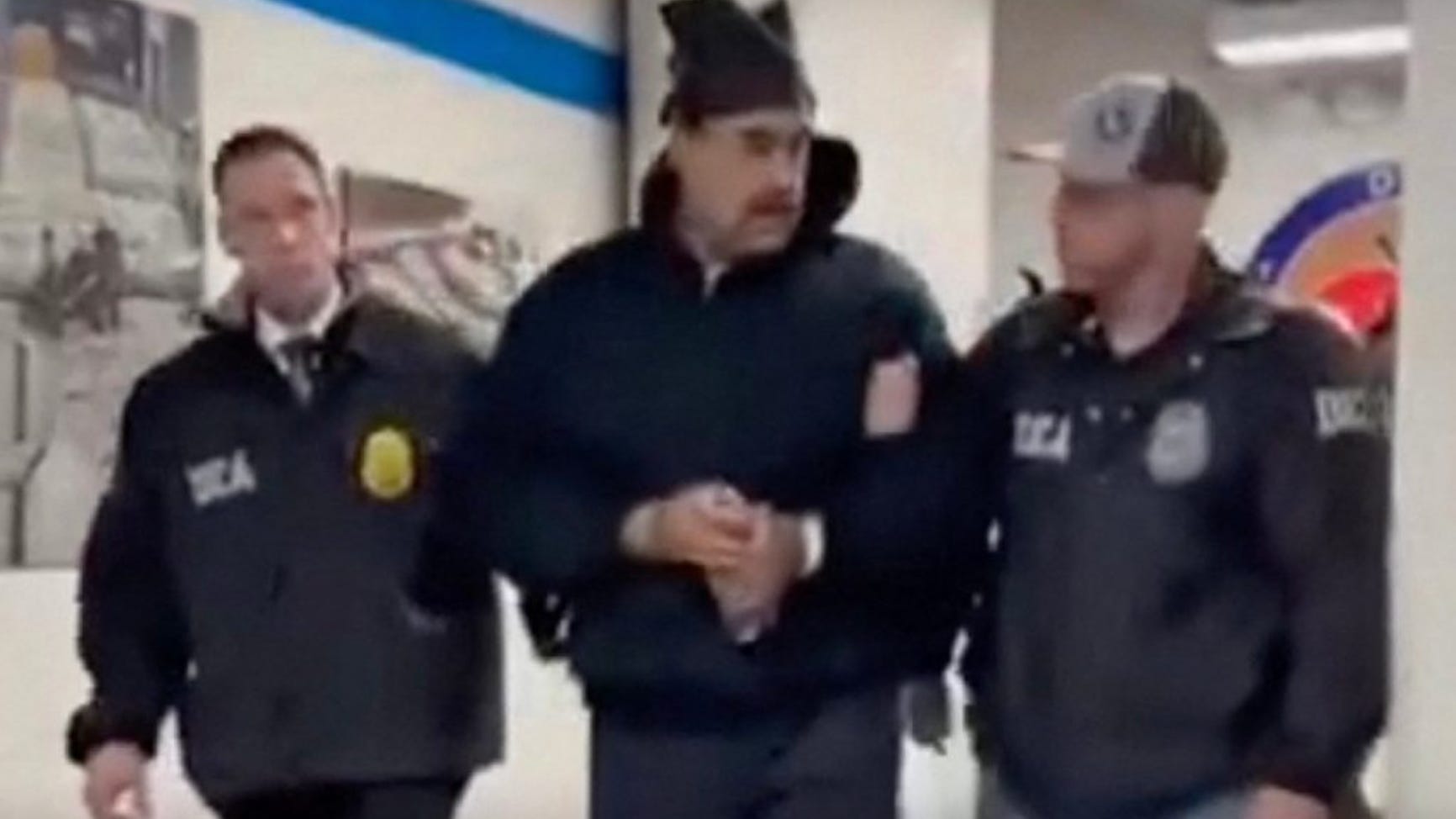
As soon as I heard that U.S. special operations forces were inside Nicolás Maduro’s compound for nearly two hours—from entry to departure—my first thought was: hmmmm. That’s interesting.
Then came the next detail. No reported casualties. On either side. Not among U.S. operators. Not among Venezuelan guards. No firefight. No wounded sent to hospitals. No imagery of a breached, burning compound. No reports of prolonged resistance.
A two-hour presence inside (or around) a fortified presidential site, followed by a clean extraction, with zero bloodshed—that combination is not normal.
Until more details come out we are left to speculate — so, following is a speculatve deeper look, informed by how these operations actually work, at what that anomaly likely means—and what it probably does not mean.
NOTE: See update at the end of the article for update as of Sunday Jan 4 at 4:15 PM EST.
Why two hours is a very long time
In modern special operations doctrine, forced takedowns are measured in minutes, not hours.
If a target is hostile and defended, speed and violence of action are decisive. Dwell time is minimized. There is almost always a kinetic signature: shots fired, injuries, damage.
A 120-minute window strongly suggests something else. Possibilities include:
perimeter control without resistance,
deliberate verification and negotiation,
compliance or stand-down orders,
or a target environment that was never truly hostile at the moment of entry.
Bottom line, elite units don’t linger inside a defended space unless they own the battlespace—or nobody is fighting them.
The second anomaly: no casualties, no damage
A breach of a hardened presidential compound typically produces something. We would expect to see or hear about wounded guards,destroyed vehicles,, bullet-scarred walls, frantic emergency responses.
Here, we’ve seen none of that.
The absence of reported casualties—on both sides—is not a minor detail. It’s a tell. Either:
There was no meaningful resistance, or
Resistance was explicitly ordered not to occur, or
The operation unfolded as a custody transfer under duress, not a raid.
Those scenarios are radically different from the public rhetoric surrounding the event.
Three plausible explanations (ranked)
1) Pre-arranged non-resistance at the security level (most plausible)
This does not require political cooperation or regime collapse. It only requires isolation of the principal, neutralization of his personal security chain, and stand-down instructions at the tactical level.
That kind of compliance can be temporary, coerced, or purely transactional. But it aligns closely with what we know so far:
the unusually long dwell time,
the absence of reported violence or casualties,
the clean extraction,
and the initial — now publicly contradicted — claims of “cooperation.”
It’s important to distinguish levels here. Tactical compliance does not equal political acquiescence. The two often diverge quickly once the operation is over.
2) Maduro was constrained, not cornered
Another possibility, consistent with early reporting, is that Maduro was at his personal residence inside the Fuerte Tiuna military complex, rather than a hardened inner bunker. Venezuelan officials have said he and his wife were seized at their residence, and some accounts describe them being taken from a bedroom.
In that scenario, the roughly two-hour window could reflect:
positive identity confirmation,
securing sensitive materials,
managing surrounding personnel and access points,
and timing a carefully rehearsed extraction.
That operational profile still implies limited or no resistance, rather than a contested breach.
3) A standoff resolved without gunfire
(least likely)
Negotiated surrenders under threat do happen. But they usually leave traces — raised voices, ultimatums, visible tension, or post-facto leaks describing how close things came to violence.
So far, we’re not seeing that texture. The available reporting suggests control and compliance more than brinkmanship.
What this almost certainly was not
Based on what’s missing, this was almost certainly not a contested breach under fire; not a chaotic midnight assault, and not a prolonged gun battle inside a loyalist stronghold. Those leave fingerprints. We don’t see them.
The silence is part of the signal
It’s also significant to consider that in spite of intense media interests, the following things we might expect to see — have not been released:
no detailed timeline,
no after-action imagery,
no descriptions of resistance,
no named units beyond generic references.
This was a very, very “clean” op — and when operations are that clean it’s often because they’re cooperative or constrained in some fashion. That’s governments often go quiet—to protect intermediaries, sources, or fragile arrangements still in play.
Contrast that with Abbottabad: we quickly got minute-by-minute detail, gunfire acknowledged, bodies discussed. Different signature. Different story.
Rhetoric vs. reality
Here’s the tension that matters as we try to piece this together. Public language has emphasized domination: “we will run the country,” decisive control, sweeping authority. But the operational footprint points to something more limited and fragile, something in the range of:
compliance without conversion,
leverage without legitimacy,
control at the point of contact, not control of the system.
Those two things can coexist briefly. They rarely coexist for long.
Reading the operation correctly
This isn’t about admiring the operation or, condemning it, or diminishing it in any way. It’s about reading it correctly.
A two-hour, bloodless capture of a sitting president inside a presumably at least somewhat fortified environment suggests some sort of internal fracture, negotiated constraint, or temporary paralysis—not total kinetic victory.
That distinction is relevant not just to our understanding of how the capture took place — but it may also shape what comes next, eg — whether authority consolidates or collapses, whether “cooperation” proves illusory, and whether today’s clean extraction becomes tomorrow’s chaos.
As a former CIA officer, I’ll say this plainly:
When the observable mechanics of the situation don’t fully match the rhetoric, pay attention to the mechanics. They’re usually telling you the truth—quietly—before the politics catch up.
Stay tuned.
There will be a lot more on this in the coming days.
UPDATE (Sunday, Jan. 4, 4:00 p.m. EST):
It’s now been about fourteen hours since I posted this, and a few developments are worth noting.
First, Venezuelan Defense Minister Vladimir Padrino has since claimed that members of President Maduro’s security detail were killed resisting the operation. That assertion is now widely reported and should be taken seriously as an official claim. His claim is not specific as to “at the residence” but he does reference Maduro’s security detail as having taken casualites. (Comment: Keep in mind the residence is part of the Fuerte Tiuna military complex and thus the operation had to get inside the military complex; go to the residence; seize Madura; and exit.)
Second, additional reporting — including from Reuters — indicates that U.S. forces did come under fire, that at least one helicopter involved in the capture operation was hit, and that there were armed engagements during insertion or exfiltration. There are few details and no reports of deaths.
What remains unclear, however — and central to the analysis above — is whether and to what degree lethal resistance occurred at the residence where Maduro was actually seized, and/or elsewhere within the sprawling Fuerte Tiuna military complex or during unrelated clashes tied to the wider strike package. To date, neither Venezuelan nor Spanish-language outlets have provided independent, location-specific reporting that resolves that question.
That distinction matters analytically. Fuerte Tiuna is a vast military zone with multiple access points, units, and residential areas, and “casualties at Fuerte Tiuna” does not necessarily mean a contested, lethal breach of the residence itself. It also raises the question of how or why a military complex of that stature was as easily breached as it apparently was.
So the update is this: there was clearly armed resistance somewhere in the operational envelope, and Venezuelan officials claim deaths. At the same time, the public record still lacks granular detail about what occurred at the point of capture itself. The unusual timeline and limited transparency around that moment remain worth examining. It may well turn out that there was no complicity on the part of any Venezuelans, but the question of limited resistance is still on the table.
I’ll continue to update as more verifiable information emerges.
Moments like this are noisy, fast-moving, and easy to misunderstand. My goal here isn’t to speculate or sensationalize, but to slow the picture down — to look carefully at what happened, what didn’t happen, and what that tells us about power, politics, and the stories we’re being asked to accept. That kind of analysis takes time, judgment, and independence. If this deeper look helped you see the event more clearly — or raised questions you hadn’t thought to ask — I hope you’ll consider becoming a paid subscriber. It’s how this work continues, and how we keep a record that doesn’t get flattened once the headlines move on
Associated Press — What to know about the U.S. capture of Venezuela’s Maduro
https://apnews.com/article/venezuela-us-maduro-what-to-know-a57528ff315a7f70ed51a1721f5e0bc2
Associated Press — U.S. plans to “run” Venezuela and tap its oil reserves, Trump says
https://apnews.com/article/ca712a67aaefc30b1831f5bf0b50665e
CBS News — U.S. strikes Venezuela and captures Maduro; Trump says U.S. would “run” country temporarily
https://www.cbsnews.com/live-updates/venezuela-us-military-strikes-maduro-trump/
Financial Times — Nicolás Maduro captured by U.S. forces and flown out of Venezuela
https://www.ft.com/content/46ee8a0f-d421-4f7d-9514-297a576ec346
Reuters — Venezuela rejects “military aggression,” says attacks hit Caracas and several states
https://www.reuters.com/world/americas/venezuela-rejects-military-aggression-caracas-several-states-2026-01-03/
Reuters — Venezuela vice president Rodriguez in Russia, four sources say
https://www.reuters.com/world/americas/venezuela-vice-president-rodriguez-russia-four-sources-say-2026-01-03/
Reuters — Loud noises heard in Venezuela capital; southern area without electricity
https://www.reuters.com/world/americas/loud-noises-heard-venezuela-capital-southern-area-without-electricity-2026-01-03/
PBS NewsHour — “We want it back”: Trump demands Venezuela return land, oil rights to U.S.
https://www.pbs.org/newshour/politics/watch-we-want-it-back-trump-demands-venezuela-return-land-oil-rights-to-u-s
Times of India — “Dragged out of their bedroom”: new details on how U.S. captured Maduro and his wife
https://timesofindia.indiatimes.com/world/us/dragged-out-of-their-bedroom-new-details-on-how-us-captured-maduro-his-wife-where-are-they-now/articleshow/126323884.cms
The Guardian — Colombia’s president says Caracas is being bombed, urges UN Security Council meeting
https://www.theguardian.com/world/2026/jan/03/venezuela-caracas-explosions-colombia-petro-un