
Intelligence Briefing: What’s Really Happening in the Ukraine-Russia War?

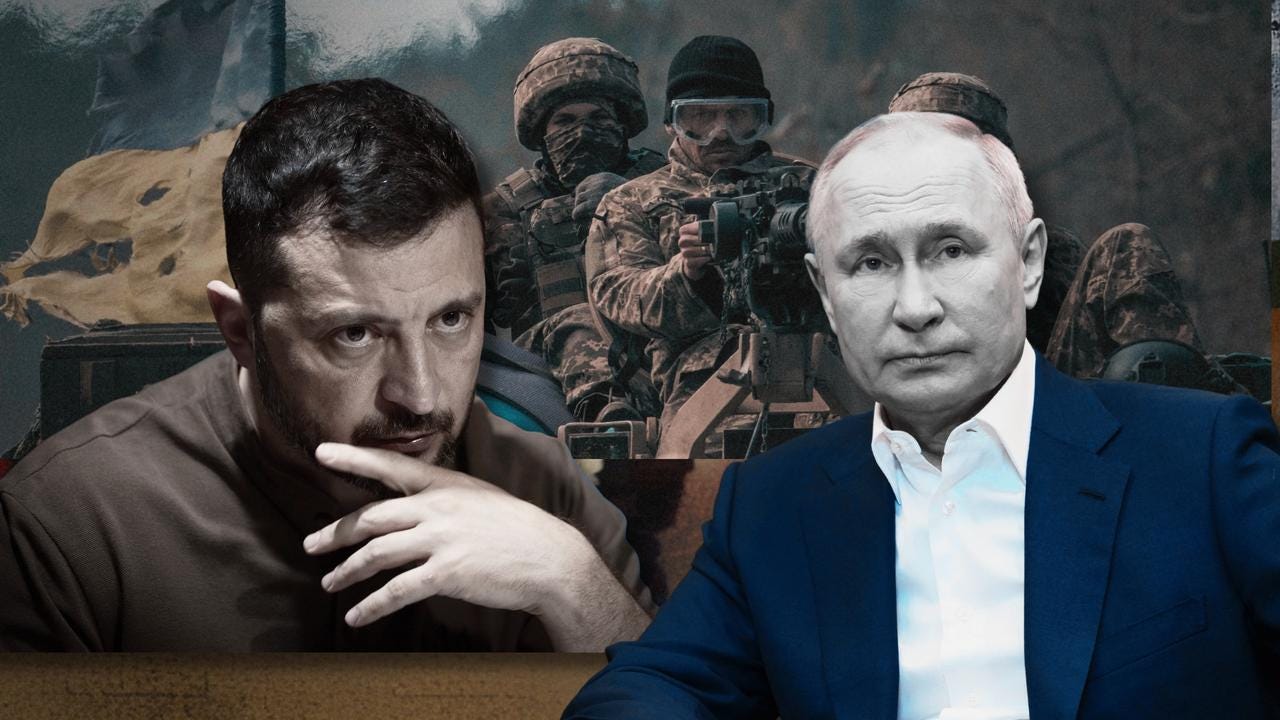
For many readers, the war in Ukraine has receded into the background.
That is understandable. The war has been going on for more than four years since Russia’s full-scale invasion. The map changes slowly. The headlines repeat themselves. The daily reports blur together: drone strikes, missile attacks, Russian gains, Ukrainian counterstrikes, another summit, another weapons package, another warning that this cannot go on forever.
But the war has not become less important.
It has become harder to read.
Volodymyr Zelenskyy’s appearance at the NATO summit in Ankara, and his meeting with Donald Trump, gives us a useful moment to reset the file. The central question is not whether we want Ukraine to be doing better. Most of us do. The question is whether the evidence supports the impression that the war has begun to move in Ukraine’s favor — or whether that impression is mostly wishful thinking.
What follows is my best open-source intelligence assessment: where does the war actually stand, and what are the main pressures now acting on both sides?
Key Judgments
First, Russia retains the capacity to continue the war and remains dangerous. It still occupies a large portion of Ukraine, continues to press in the east, retains substantial missile and drone capacity, and appears committed to further offensive operations rather than an acceptable negotiated settlement. Recent Reuters reporting, citing sources close to the Kremlin, says Putin is more likely to escalate than compromise, with the remaining Donbas still viewed in Moscow as a central objective.
Second, Ukraine appears to have regained initiative in one crucial dimension of the war: the contest over Russia’s logistics, fuel, air defenses, and rear-area infrastructure. That does not mean Ukraine controls the entire battlefield. It means Ukraine is increasingly able to impose costs on the Russian system that supports the battlefield.
Third, Russia’s manpower and economic model is under visible stress, but not yet breaking. Moscow can still generate forces. It can still absorb casualties. It can still coerce, pay, recruit, and mobilize at the margins. But the methods needed to sustain the war are becoming more expensive, more coercive, and more politically exposed.
Fourth, Ukraine’s own manpower problem remains serious. Drones, precision strikes, and technological adaptation can reduce the burden on infantry, but they cannot eliminate it. Ukraine still needs soldiers to hold ground, rotate exhausted units, and defend towns under constant pressure.
Fifth, the war is likely entering a contest of sustainability rather than a decisive maneuver phase. The core question for the next period is not simply who controls which village. It is which side can maintain the combined system of manpower, production, fuel, air defense, drone adaptation, political endurance, and external support.
Scope and Confidence
Confidence is highest on broad structural judgments: Russia’s continued capacity to fight, Ukraine’s increased use of long-range strikes and drones, Russia’s fuel and refinery problems, and Ukraine’s continuing manpower constraints.
Confidence is lower on near-term battlefield forecasts. Claims of local advances are often contested, delayed, or shaped by information operations. The line of contact matters, but day-to-day map changes are an incomplete guide to the war’s direction.
The Operating Picture
Russia is still trying to win a war of mass.
That has been the central fact from the beginning. Russia’s advantages are not subtle: more people, more territory, more artillery mass, more missiles, more strategic depth, more tolerance for casualties, and a political system that can suppress dissent.
Ukraine’s advantages are different: higher motivation, better adaptation, Western support, battlefield improvisation, and now a rapidly developing drone and long-range strike ecosystem.
For much of the war, the central question was whether Ukraine could survive Russia’s mass.
That is still a real question. But it is no longer the only question.
The emerging question is whether Russia can continue converting mass into battlefield progress if Ukraine keeps degrading the system that makes that mass usable.
That distinction matters.
An army is not just men. It is fuel, ammunition, trucks, rail lines, repair shops, command posts, air defenses, depots, communications, training pipelines, replacement units, medical evacuation, and political permission to keep losing people.
Ukraine is increasingly attacking that system.
Zelenskyy’s Ankara Message
Zelenskyy’s most important statement in Ankara was not a slogan. It was an analytic argument.
Speaking with Trump, he said that at the beginning of the full-scale war Putin was stronger. But now, Zelenskyy argued, Russia is losing initiative because the war is no longer determined only by numbers.
His formulation was awkward in translation but strategically clear: people still matter, but the decisive unit is increasingly “people with technologies.”
Then he said the key line:
“We are trying to move this war to the sky from the battlefield.”
That should not be read as a claim that Ukraine has conventional air superiority. It does not. Russia still launches major missile and drone attacks against Ukrainian cities. Ukraine continues to plead for more air defense, especially Patriot systems and interceptors.
Zelenskyy was describing something else: the increasing dominance of drones, sensors, targeting systems, long-range strikes, and above-battlefield surveillance over what can happen on the ground.
In practical terms, Ukraine is trying to use the sky to shape the land battle.
The purpose is to cut Russian logistics — in Zelenskyy’s words, “weapon, petrol, diesel” — without paying the cost of massed human assaults.
That is the strategic logic of Ukraine’s current approach.
Russia wants to grind forward with men and artillery. Ukraine is trying to make that method harder to sustain by striking the fuel, depots, refineries, rail links, air defenses, command nodes, and rear-area infrastructure that keep Russian forces operational.
The Fuel War
The most concrete evidence for this shift is the campaign against Russian energy infrastructure.
Russia is one of the world’s major energy powers. Yet it is now dealing with fuel disruption significant enough to trigger emergency measures. Reuters reported that Russia imposed a temporary diesel export ban after Ukrainian drone strikes on refineries contributed to gasoline shortages and price spikes. Reuters also reported Ukrainian strikes against Russian refineries, tankers, and pipeline pumping stations, including targets ranging from areas near Ukraine to the Urals.
This does not mean Russia is running out of fuel in a simple sense.
It does mean Ukraine has found a pressure point.
Fuel is both a military input and a domestic political issue. Russian troops need diesel. Russian logistics need trucks and rail systems. Russian agriculture, industry, and civilian transport need fuel too. When refineries are hit, the effects ripple beyond the immediate military target.
The more Ukraine can make Russia defend its own energy system, the more Russian air defense, repair capacity, and political attention are pulled away from other priorities.
That is why these strikes matter. They are not just retaliation. They are part of an effort to change the cost structure of the war.
The Russian Manpower Problem
Russia still has the manpower advantage. That point should not be softened.
Moscow can draw from a larger population and has shown a willingness to absorb enormous casualties. NATO Secretary General Mark Rutte said in Ankara that Putin has been willing to sacrifice “30, some months, even 35,000” men on the battlefield, while also noting Ukraine’s success in striking Russian energy and defense infrastructure deep inside Russia.
That level of attrition would be politically intolerable in most countries. Russia has tolerated it.
But tolerance is not the same as sustainability.
Since the politically disruptive mobilization of 2022, Putin has tried to avoid another open mass mobilization. Instead, Russia has relied on contract recruitment, signing bonuses, poorer regions, prisoners, migrants, coercion, and pressure on conscripts.
That model appears to be under strain.
Reports from inside Russia increasingly describe pressure tactics used to produce new contract soldiers. The details vary by region, but the broader pattern is consistent: the state is having to work harder to maintain the flow of men.
The important judgment is not that Russia is out of manpower. It is not.
The judgment is that the manpower pipeline has become more expensive, less voluntary, and more politically sensitive.
That creates a dilemma for Putin. He wants a victory large enough to justify the war, particularly in the Donbas. But achieving that objective may require a level of mobilization he has spent years trying to avoid.
The “Special Military Operation” Problem
This is where the Kremlin’s language matters.
For years, Moscow insisted the war was not a war. It was a “special military operation.”
That phrase was absurd, but it served a purpose. It allowed the Kremlin to fight a large war while avoiding the full domestic implications of saying Russia was at war.
The phrase helped preserve a political bargain with Russian society: the state fights, the state censors, the state recruits from the margins, but many ordinary Russians can continue to live as if the war is something distant.
That fiction is now harder to maintain.
Kremlin spokesman Dmitry Peskov recently said the “special military operation” had become “a real war,” blaming Western support for Ukraine. That does not necessarily mean Russia has formally declared war or that general mobilization is imminent. But the rhetorical shift is significant. It gives the Kremlin a bridge from limited operation to national struggle.
This is an indicator worth watching.
If the Kremlin begins consistently describing the conflict as a war against NATO or the collective West, that may be preparation for harsher domestic measures, expanded mobilization, or a longer period of national sacrifice.
Ukraine’s Constraint: Holding the Line
Ukraine’s strategic innovation should not obscure its main vulnerability.
Ukraine needs people.
The country has fought with extraordinary resilience, but the burden on the force is severe. Infantry shortages, exhausted units, limited rotation, and the political difficulty of mobilization remain major constraints.
Drones can make a smaller force more lethal. Long-range strikes can impose costs far behind the line. Air defense can protect cities and infrastructure. But none of these removes the need for soldiers to hold positions under fire.
This is the main caution against excessive optimism.
Ukraine may be moving faster technologically. It may be hurting Russia’s logistics. It may be imposing new costs inside Russia. But if it cannot sustain the front, rotate units, and preserve trained manpower, technological initiative may not translate into strategic success.
In that sense, Zelenskyy’s own wording is useful. He did not say technology replaces people. He said the key is people with technology.
The people remain the limiting factor.
Russia’s Constraint: Sustaining the Machine
Russia’s problem is not identical.
Russia has more people, but it must sustain a larger and more wasteful military system.
Every Russian advance requires fuel, ammunition, replacement troops, vehicles, medical support, artillery barrels, drones, communications, repair facilities, and command structures. Russia can accept high losses, but it still has to replace them.
Ukraine’s current campaign is aimed at that replacement and sustainment system.
This is why the war can look contradictory. Russia can still take ground in one sector while its broader war machine is under growing pressure. Ukraine can lose ground locally while improving its strategic position by making the Russian campaign more costly and less efficient.
Both can be true at the same time.
That is the difference between tactical movement and strategic initiative.
Trump and the Diplomatic Layer
Zelenskyy’s meeting with Trump should be viewed as part of the military picture, not separate from it.
Zelenskyy was not merely asking for sympathy. He was trying to persuade Trump that Ukraine has leverage.
The argument was essentially this: Ukraine is not only surviving. It has a method. It can hit Russia’s war machine. It can adapt faster. It can use drones and long-range strikes to make Russia’s manpower advantage less decisive. But it needs air defense, Patriot interceptors, production support, and continued permission to apply pressure.
At Ankara, Trump said the United States could allow Ukraine to manufacture Patriot air defense systems. AP reported that NATO allies also approved a major aid package for Ukraine through 2027, though the U.S. contribution remains limited and uncertain.
For Ukraine, that distinction matters.
A license, a promise, or a summit statement is not the same as an operational capability. The key question is whether the weapons, interceptors, production lines, and supply chains arrive at scale and on time.
For Trump, the question may be whether Ukraine can demonstrate enough momentum to make continued support look like leverage rather than charity.
That is why Zelenskyy’s message was tailored the way it was. He was telling Trump: we are not just asking you to help us endure. We are showing you how Russia can be pressured.
Alternative Explanations
A disciplined assessment has to consider less favorable interpretations.
Alternative one: Ukraine’s deep-strike campaign is tactically impressive but strategically insufficient. Russia may absorb refinery damage and fuel disruption just as it has absorbed casualties, sanctions, and equipment losses. The state may reroute supplies, repair facilities, restrict exports, and continue fighting.
Alternative two: Russian pressure in the Donbas may still outpace Ukrainian interdiction. Even if Russia pays a high price, it may continue to gain enough ground to claim progress and sustain Putin’s political narrative.
Alternative three: Ukraine’s manpower constraint may become decisive before Russia’s sustainment problems do. If Ukraine cannot hold the line, improved drone capability and refinery strikes may not prevent territorial loss.
Alternative four: diplomacy could freeze the war on terms favorable to Russia. If Trump or other outside actors push for a settlement before Ukraine’s pressure campaign matures, Putin may be able to bank existing gains and prepare for the next phase.
None of these alternatives should be dismissed.
The strongest version of the current Ukrainian case is not that Russia is on the verge of collapse. It is that Ukraine has found a way to impose costs in areas Russia previously assumed were relatively secure.
That is meaningful. It is not conclusive.
Indicators to Watch
The next phase of the war should be judged less by daily headlines and more by a handful of indicators.
One: Russian fuel availability and refinery repair cycles. If fuel shortages remain localized and temporary, Russia can absorb them. If export bans, rationing, imports, and price spikes persist, the pressure is becoming strategic.
Two: Russian recruitment behavior. Watch for higher signing bonuses, broader coercion, increased pressure on conscripts, new legal mechanisms, or a shift toward formal mobilization.
Three: Kremlin language. Repeated references to “real war,” NATO aggression, or national struggle may indicate preparation for larger domestic demands.
Four: Ukrainian force rotation and mobilization reform. If Ukraine cannot regenerate infantry and rotate exhausted units, its technological edge will be constrained.
Five: Air defense supply. Patriot interceptors, anti-ballistic systems, and local production arrangements will determine whether Ukraine can protect cities, infrastructure, and fielded forces.
Six: Russian operational tempo in the Donbas. If Russian advances remain slow and costly, Ukraine’s strategy is gaining time. If Russia accelerates despite interdiction, the balance is less favorable.
Seven: Western industrial follow-through. Announcements matter less than production, delivery, repair, training, and ammunition flow.
Assessment
The balance of pressure has changed.
Russia remains a formidable adversary. It still occupies Ukrainian territory. It still has the capacity to kill at scale. Putin has not abandoned his objectives, and current reporting suggests he is more inclined to escalate than compromise.
But Russia’s preferred model of war is under increasing stress.
That model depends on mass, artillery, fuel, replacement manpower, coercion, and political patience. Ukraine is now attacking several of those pillars at once. It is striking refineries and fuel systems. It is using drones to shape the battlefield from above. It is forcing Russia to defend more of its own territory and infrastructure. It is trying to make the war more expensive inside Russia, not only in Ukraine.
Ukraine’s position is also fragile. Its manpower problem is real. Its dependence on Western air defense is real. Its ability to translate technological adaptation into territorial gains remains unproven.
The best assessment is therefore measured but significant:
Ukraine is not winning outright. Russia is not collapsing. But Ukraine has regained initiative in important parts of the war, especially the contest over logistics, fuel, drones, and battlefield transparency. Russia can still fight. It can still advance. It can still escalate. But it is having to pay more, coerce more, defend more, and explain more.
That is not victory.
It is pressure.
And in a long war of attrition, pressure on the opponent’s system may matter more than movement on the map.
Zelenskyy’s comment in Ankara captured that shift. Moving the war “to the sky” was not a public-relations line. It was a description of Ukraine’s effort to change the terms of the conflict: away from Russia’s advantage in bodies and toward a contest of technology, logistics, precision, production, and endurance.
That is where the war appears to be heading.
Not toward a clean breakthrough.
Not toward immediate Russian collapse.
But toward a harder, more complex contest over which side’s war machine can keep functioning under pressure.
For now, Russia still has mass.
Ukraine has adaptation.
The outcome may depend on which proves more sustainable.
For this post, I’ve returned back to my roots as an intelligence officer and tried to provide a briefing that was prompted by my own curiousity to look into the status of the war in the aftermath of the NATO summit and Zelenskyy’s appearance there. I know it goes pretty deeply into the weeds; I hope it provided some useful insights. At its core this is what Deeper Look is about — meaning analysis, as unbiased as I can make it, doing for the community here what I did professionally for policy makers. Your support truly makes a difference — so thanks for supporting the work.
Audio listeners can stop here.
Sources
Source List
Zelenskyy / Trump / NATO Summit / Official Statements
https://www.nato.int/en/news-and-events/events/transcripts/2026/07/07/remarks-by-the-nato-secretary-general-and-the-president-of-ukraine
https://apnews.com/article/4821e7c6f2ab0b8a729d0e798bfe6359
https://www.reuters.com/world/europe/trump-says-both-sides-ukraine-war-want-settlement-2026-07-08/
https://www.rev.com/transcripts/trump-meets-zelenskiy-on-sidelines-of-nato-summit
https://www.americanrhetoric.com/speeches/volodymyrzelenskyynatoforum2026.htm
Putin / Kremlin Intentions / Escalation Risk
https://www.reuters.com/world/europe/putin-likely-escalate-ukraine-war-despite-trump-peace-push-sources-say-2026-07-09/
https://english.nv.ua/nation/putin-rejects-peace-talks-and-is-preparing-for-escalation-of-war-in-near-future-50623135.html
https://meduza.io/en/news/2026/07/06/kremlin-spokesman-says-special-military-operation-has-become-a-real-war-blames-western-countries
Russian Fuel Crisis / Refinery Strikes / Energy Infrastructure
https://www.reuters.com/business/energy/russia-bans-diesel-exports-increase-domestic-supply-says-deputy-pm-2026-07-08/
https://www.reuters.com/business/energy/cossacks-volunteers-help-keep-order-petrol-stations-russian-black-sea-resort-2026-07-03/
https://www.reuters.com/business/energy/russian-frustration-rises-fuel-crisis-bites-2026-07-02/
https://www.reuters.com/commentary/reuters-open-interest/putins-diesel-export-ban-risks-new-fuel-shock-2026-07-01/
https://www.reuters.com/business/energy/russia-discusses-importing-fuel-amid-ukrainian-strikes-newspaper-says-2026-06-23/
https://www.reuters.com/business/energy/russia-weighs-diesel-export-ban-steady-fuel-market-deputy-pm-says-2026-06-23/
https://www.reuters.com/business/energy/russias-largest-oil-refinery-halts-processing-after-drone-attack-sources-say-2026-07-07/
https://www.theguardian.com/world/2026/jul/09/ukraine-war-briefing-russia-bans-diesel-exports-as-refinery-attacks-trigger-gas-shortages-and-price-spikes
https://www.ft.com/content/13687b48-9e54-44a1-bd4d-600bbc052baf
https://www.businessinsider.com/russia-worst-fuel-crisis-ukraine-drone-strikes-crimea-petrol-unavailable-2026-7
Battlefield Situation / Ukrainian Initiative / Russian Advances
https://www.reuters.com/business/aerospace-defense/senior-ukrainian-commander-sees-imminent-turning-point-war-2026-05-27/
https://www.reuters.com/video/watch/idRW393327052026RP1/
https://www.reuters.com/business/aerospace-defense/russian-defence-ministry-says-its-forces-captured-kostiantynivka-eastern-ukraine-2026-07-03/
https://www.reuters.com/world/ukrainian-capital-kyiv-under-missile-attack-officials-say-2026-07-05/
https://kyivpost.com/post/76965
Ukraine Manpower / Mobilization / Rotation / Army Reform
https://www.reuters.com/world/europe/ukraine-rolls-out-army-reform-zelenskiy-says-2026-05-01/
https://www.reuters.com/world/ukraines-army-chief-orders-time-limit-frontline-troops-2026-04-30/
https://www.reuters.com/world/ukraine-hikes-military-pay-seeks-more-foreign-fighters-zelenskiy-says-2026-06-12/
Russian Recruitment / Mobilization Pressure
https://www.rferl.org/a/russia-ukraine-war-forced-recruitment-personnel/33794661.html
https://understandingwar.org/research/russia-ukraine/russian-offensive-campaign-assessment-may-27-2026/
https://understandingwar.org/research/russia-ukraine/russian-offensive-campaign-assessment-june-27-2026/
https://www.criticalthreats.org/analysis/russian-offensive-campaign-assessment-may-30-2026
Drones / Technology / Deep Strike / War of Adaptation
https://www.csis.org/analysis/russian-blood-and-treasure-ballooning-costs-putins-war
https://www.ft.com/content/13687b48-9e54-44a1-bd4d-600bbc052baf
https://www.americanrhetoric.com/speeches/volodymyrzelenskyynatoforum2026.htm
https://understandingwar.org/research/russia-ukraine/russian-offensive-campaign-assessment-june-27-2026/
Air Defense / Patriots / Russian Missile and Drone Attacks
https://www.reuters.com/world/ukrainian-capital-kyiv-under-missile-attack-officials-say-2026-07-05/
https://apnews.com/article/4821e7c6f2ab0b8a729d0e798bfe6359
https://www.reuters.com/world/europe/trump-says-both-sides-ukraine-war-want-settlement-2026-07-08/
Russian Economy / Banking / War Strain
https://www.reuters.com/business/finance/war-threatens-russian-banking-crisis-european-intelligence-report-says-2026-07-06/
https://www.reuters.com/commentary/reuters-open-interest/putins-diesel-export-ban-risks-new-fuel-shock-2026-07-01/
Analytic / Background Sources
https://www.intelligence.gov/mission/our-values/objectivity
https://understandingwar.org/research/russia-ukraine
https://www.rferl.org/z/634
https://www.reuters.com/world/ukraine/
This is why I am a devoted paid subscriber‼️ Michael, you really deserve some recognition for your hard work. Thanks 🙏🏼 so much for delivering on your promise for clear and honest analysis of the global issues of our time, I find it incredibly helpful because clarity and precision are NOT found anywhere else on the news grid today‼️👏🏼😅🙏🏼🙏🏼
You've somehow missed out on an important point in this otherwise excellent assesment: Russian economy. It's quickly deteriorating, and things have been much worsened by the prohibitive central bank rate, high inflation, and unsustainable budget deficit. Not a decisive factor by itself, it has multiple system-wide implications.