
Why Is the Legacy Media Ignoring the New Allegations of Trump-KGB Connections?
And what this means for independent journalism in this moment

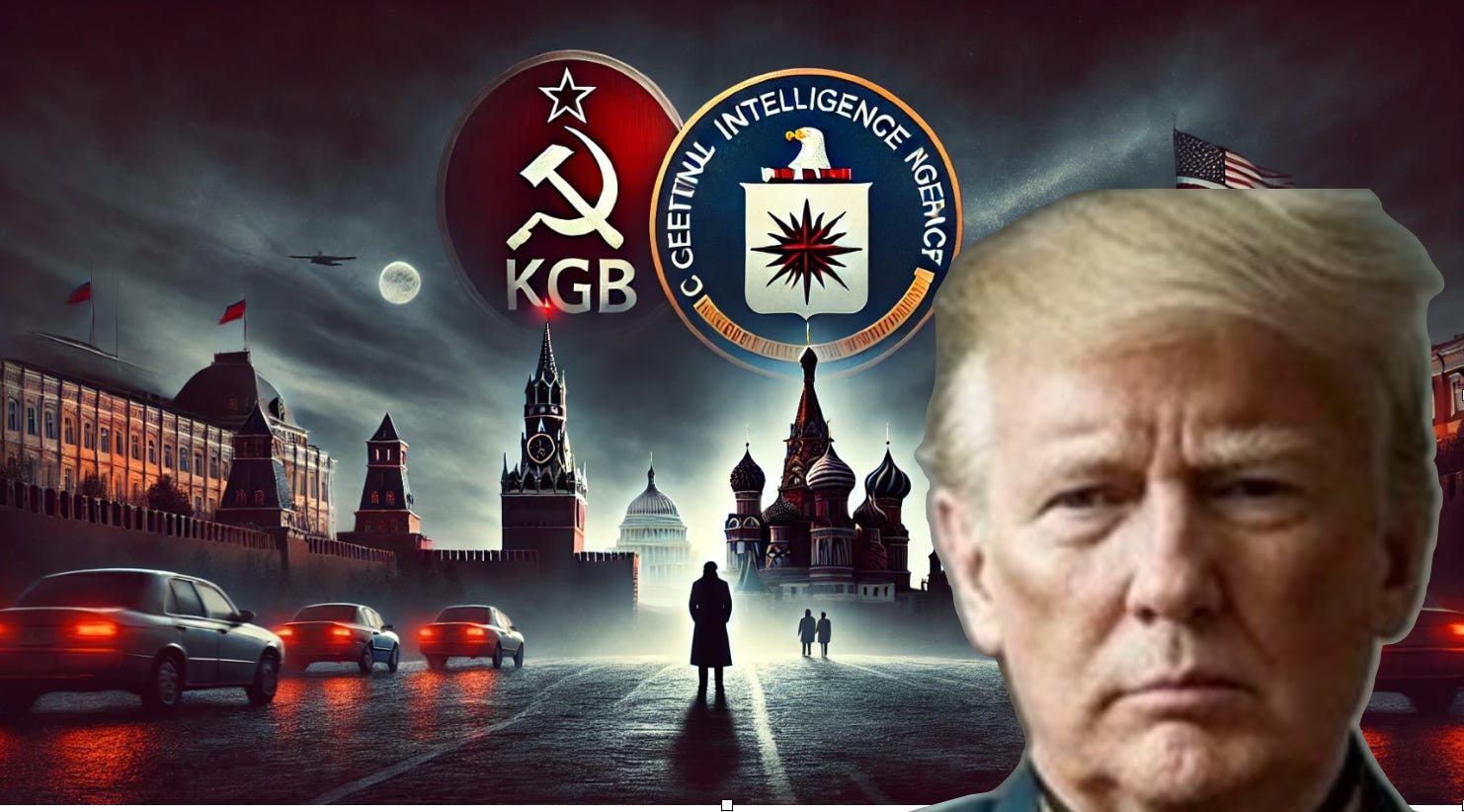
Why is the legacy media ignoring the recent allegations made by former KGB officer Alnur Mussayev that Donald Trump was recruited by the KGB and given the code name Krasnov in the 1980s? Surely, these are significant claims worthy of the attention of major media outlets like The New York Times, The Washington Post, CNN, etc.—yet they’ve all remained quiet about it. What gives?
As a mental exercise, just imagine—what if a similar claim emerged about any other sitting president, especially a Democrat? A media firestorm would be guaranteed. Imagine if a credible former KGB officer alleged that Barack Obama or Hillary Clinton had been cultivated as an asset for decades. Fox News, Newsmax, and every right-wing outlet would be running 24/7 emergency coverage, while the rest of the press would scramble to break the next piece of the story.
A Short List of ‘Legitimate Reasons’
Instead, we are met with a deafening silence on a story that is vitally important and clearly of deep interest to a wide section of the American public. Despite the significance of the allegations, The New York Times, The Washington Post, CNN, and others have barely touched the story, leaving it to Substack writers and independent journalists to fill the void.
Is it fear? Laziness? Or something else? Here’s a short list of potentially legitimate reasons:
1. The Two-Source Rule
Standard journalistic practice dictates that a major claim, especially one involving criminality, espionage, or misconduct—particularly concerning a former U.S. president—needs at least two independent sources before being reported as fact. If only one source is available, news organizations may report the existence of the allegation but will qualify it heavily—e.g., "One source claims…" or "Unverified reports suggest…".
To be fair, some legacy media outlets did report the existence of the allegation, giving it brief mentions. But while that might explain initial hesitation, it does not explain the lack of investigative follow-up.
2. How Credible Is the Single Source?
Editors making editorial decisions would ask:
Who is the source?
What is their background, credibility, and potential bias?
Do they have direct knowledge, or is it hearsay?
Have they been reliable in the past?
Little was initially known about Alnur Mussayev, and while it is absolutely true that he potentially had access to the information he provided, he has a complicated past (which I’ll be reporting on soon, by the way—spoiler alert: it’s complicated, but he’s not a source to be dismissed lightly).
That said, while there is a single source for the specific allegation that Trump was fully recruited by the KGB and given the code name "Krasnov" in 1987, at least two other former KGB officers—Yuri Shvets and Viktor Zhvyrev—have separately confirmed the existence of a relationship between Trump and the KGB dating back to the 1980s. However, they stop short of saying outright that he was formally recruited as an agent.
The Not-So-Legitimate (and Alarming) Explanations
1. Fear of Retaliation
Trump is nothing if not litigious. In 2024 alone, he filed four major lawsuits against media outlets, including:
ABC News (which settled for $15 million)
Meta (Facebook) (which settled for $25 million)
CBS News (case pending)
The Des Moines Register (case pending)
While it may be understandable for legacy media outlets to avoid legal entanglements from a business standpoint, from a journalistic ethics standpoint, their timidity in the face of legal threats is not a legitimate reason to remain silent.
2. Media Fatigue
Many in the media seem to assume that the public is tired of hearing about Russia. The belief is that bringing up Trump's ties to Russia again will elicit eye-rolls and groans of "Russia, Russia, Russia."
That said, the only new element in Mussayev’s claims is the firm assertion that Trump was fully recruited and given a KGB code name. The rest of the story isn't entirely new. However, judging from what has happened on Substack and other independent platforms—where public interest has been overwhelming, leading to a surge in readership—there is clearly a high degree of public interest in this topic.
What Happens Next?
The legacy media has left a void that needs to be filled. To the extent that we can, those of us operating in this space on Substack and elsewhere will need to step up and do the work that major outlets should be doing.
This means:
Compiling and analyzing all available public evidence
Investigating thoroughly—without fear and without bias
Avoiding the pitfalls of amateur sleuthing—sticking to credible, verifiable, and responsible reporting
Yes, it’s difficult for independent journalists to compete with the financial and investigative resources of major media outlets. However, that shouldn’t intimidate us into thinking we can’t investigate this effectively.
Mussayev, Shvets, and Zhvyrev are all still alive. And ironically, because of my background—not just as a former CIA officer, but as one well-known in KGB circles for my work in Moscow—I have access to sources who might not otherwise speak. In fact, I have already begun reaching out to former KGB officers who know this story from the inside.
Final Thought: This Is a Moment for Independent Journalism
The big guys in legacy media are letting this slip by, which means independent "little guys," have to step up.
Just this past week, I had a conversation with Jeff Stein of SpyTalk—arguably the most developed Substack outlet covering intelligence matters—about this exact issue. We both agreed that it is an obligation now, in this situation, to pursue the topic with full intensity, discipline, and using whatever resources we have or can develop.
So I leave you with this thought, which is a bit of a plea, not for my work here specifically, but for all the work being done on this topic: please, in this moment in particular, support independent journalists who are doing genuine, responsible, investigative work on this story. Be critical, be discerning, and most importantly—keep paying attention. Because your attention to this topic and support to those doing the work could ultimately influence the outcome. And as always — thanks VERY much fo your support to what I’m trying to do here.
The media itself has become a plaything of the ultra-wealthy, a narrative sandbox for billionaires who fancy themselves philosopher-kings. We’re witnessing a new class of would-be oligarchs, technocrats with absurdly deep pockets, deciding which stories matter and which are better left to wither in obscurity.
Consider Jeff Bezos snapping up The Washington Post, Elon Musk treating Twitter (excuse me, X) like his personal thought experiment, or Rupert Murdoch’s decades-long engineering of public opinion. And let’s not forget the likes of Peter Thiel, who famously funded the demise of Gawker simply because he didn’t like what they said about him. That’s just the public-facing, legally aboveboard version of media influence—imagine what lurks in the shadows, where undisclosed billions grease the gears of censorship, bribery, and blackmail. The result? A media ecosystem that’s not just selective in its scrutiny but downright allergic to stories that inconvenience its patrons.
The real scandal isn’t just that certain stories get buried—it’s that we’ve quietly accepted this dynamic as the natural order of things. The fourth estate was meant to hold power accountable, not to become an instrument of it. And yet, here we are, watching a billionaire-funded information cartel decide, with alarming efficiency, what the public gets to know.
Mike Sellars’ efforts in this extraordinarily important topic are courageous, well thought through, and unfortunately, largely standing alone. I follow them here, and have long thought that the relationship between Trump and the Russians, rather plain for all to see if they wish to see, deserves far more analytical attention than it’s getting. The issue, for me at least, is one of blatant fealty to Putin. I’ll have to leave the reasons that lie behind and bed that fealty to history, at least for now.
Whether an historic recruitment of Trump in 1987 is the defining feature of that fealty, we will one day learn. For myself, at my age, I don’t expect to witness that reveal when it does come, but have no doubt that one day Americans will be told exactly what happened to turn an American president against his own country. How it was that such an embarrassing example of a man, his bald sociopathy and misanthropy, came to election twice, will be the great challenge for historians of the 21st Century. Eventually, the lid will come off, likely from a Russian source of some kind. And it will put Trump’s illegal relationship with an adversarial foreign power in blindingly bright relief once and for all.
What cannot be denied, however, is now inescapable, established fact: the United States has upended 80 years of international order and changed team colors overnight. Worse, Trump has stopped nearly every kind of assistance at a time the Russians are feeling free and empowered to step up their destruction of the poor, benighted Ukraine. We live a real and shameful nightmare. He has done this singularly, but with the contemptible silence of two hundred and seventy Republican collaborators in the House and Senate.
They hold their tongues for the same reason the mainstream media lies quietly-fear. Bezos made that clear with his Washington Post policy changes; META chief Zuckerberg has not made the slightest effort to conceal his pandering and cash give-away, Pichai, Thiel. And the others align with the same cowardly intent with varying levels of visibility. Fear rather than fidelity to the Republic or the Constitution has overcome the “Truth Dies In Darkness” theme that used to guide the generally but not always principled conduct of the media.
The orientation of big money in US history has long been pretty clear over the decades; big money begets big money and big money begets power and the unscrupulous use of power begets fear.